There is a peculiar stillness that arrives only after every plan has collapsed. You try every remedy, consult every expert, rearrange your routines, and plead with fate. Then comes the quiet morning when you realize that nothing worked—and strangely, the panic stops. In its place sits a clear, devastating clarity.
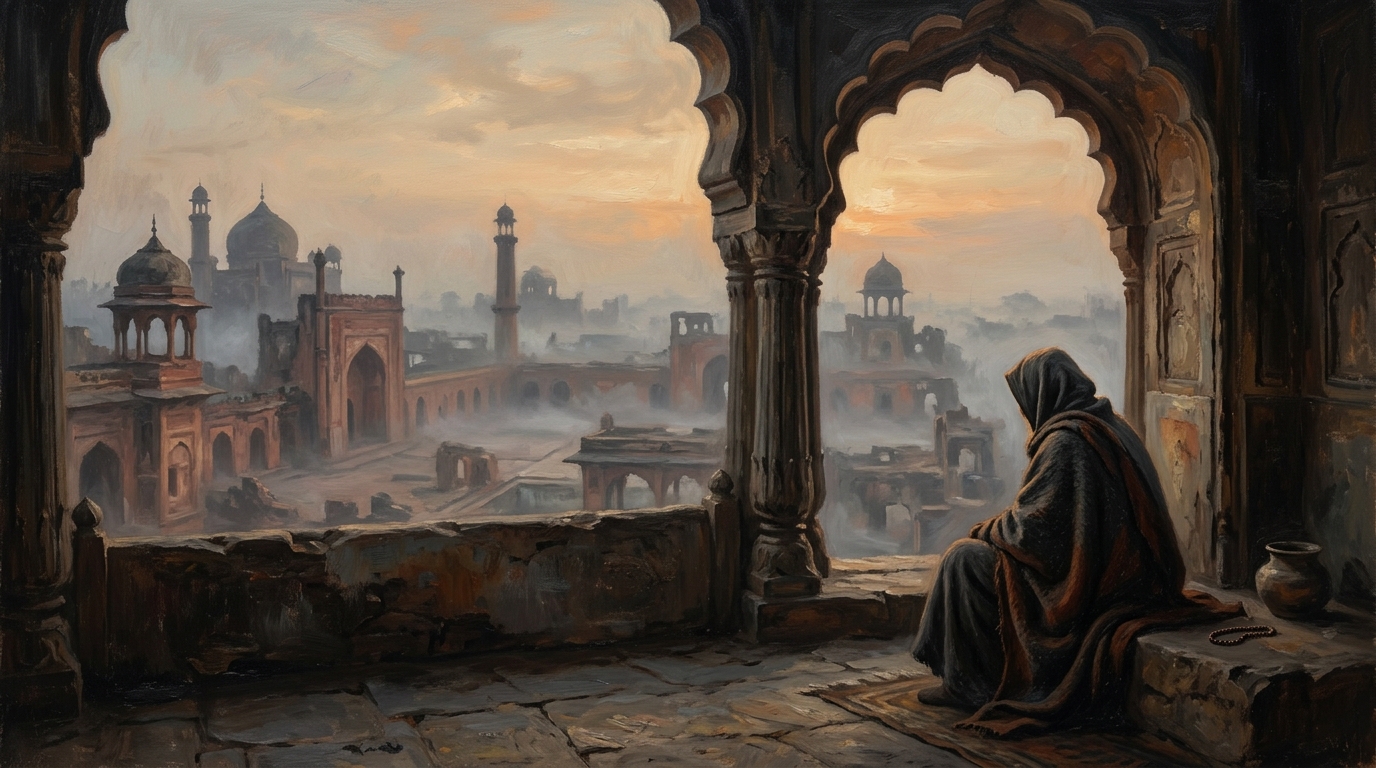
Mir Taqi Mir knew this threshold intimately. Writing from an eighteenth-century Delhi ravaged by invasions and personal loss, he did not rage against the heavens. Instead, he sat down with his grief as if greeting an old acquaintance. In this monumental ghazal, opening with 'Ulti ho gayin sab tadbeeren kuchh na dawa ne kaam kiya', Mir captures the exact moment when resistance ends and surrender begins.
The Architecture of a Farewell
This poem is a classical Urdu ghazal composed by Mir Taqi Mir (1723–1810), revered across South Asia as *Khuda-e-Sukhan*, the God of Poetry. In the ghazal tradition, each two-line verse, called a *sher*, is an autonomous universe. A poet can move from existential grief in one couplet to biting satire in the next without warning.
Binding this piece together is the *radif*, the unchanging refrain *kaam kiya* ('did its work' or 'acted as'). Just before it sits the *qafia*, the rhyming syllable: *tamām*, *ārām*, *paiġhām*, *badnām*, and so on. The opening couplet is the *matla*, which establishes the rhyme scheme in both lines. The ghazal closes with the *maqta*, where Mir writes his pen-name into a final, defiant confession. The tone throughout is deceptively casual: Mir speaks of devastation in the measured voice of someone discussing the weather.
Reading the Verses: From Heartbreak to Heresy
Across fifteen couplets, Mir moves from personal illness to cosmic injustice, peeling back the illusion that human beings control their destinies.
The Failed Cure
الٹی ہو گئیں سب تدبیریں کچھ نہ دوا نے کام کیا
دیکھا اس بیماری دل نے آخر کام تمام کیا
उल्टी हो गईं सब तदबीरें कुछ न दवा ने काम किया
देखा इस बीमारी-ए-दिल ने आख़िर काम तमाम किया
Ulṭī ho gaīn sab tadabīreñ, kuch na davā ne kām kiyā
Dekhā is bīmārī-e-dil ne ākhir kām tamām kiyā
All strategies turned upside down; no medicine did any work.
See, this sickness of the heart finished the job at last.
The ghazal opens with an autopsy of hope. The word *tadbeer* means a deliberate plan or tactical maneuver. Mir tells us that every intervention produced the exact opposite of its intended result; the cures aggravated the disease. The phrase *kaam tamaam kiya* carries a sharp double meaning in Urdu: it means both 'to finish the job' and 'to kill'. Mir treats his broken heart not as a passive victim, but as a resolute executioner who finally brought the long agony to an end.
The Exhausted Night of Youth
عہد جوانی رو رو کاٹا پیری میں لیں آنکھیں موند
یعنی رات بہت تھے جاگے صبح ہوئی آرام کیا
अहद-ए-जवानी रो रो काटा पीरी में लीं आँखें मूँद
या'नी रात बहुत थे जागे सुब्ह हुई आराम किया
The era of youth was spent weeping; in old age, the eyes closed shut.
That is to say, we stayed awake all night, and when morning came, we rested.
Here Mir shrinks an entire human lifetime into a single sleepless night. Youth was not a season of romance or triumph; it was a relentless vigil of tears. Old age and blindness become nothing more than the heavy eyelids of morning. By comparing death to simply lying down after a long watch, Mir strips mortality of its horror, leaving behind only the profound relief of sleep.
The Messenger of Mortality
حرف نہیں جاں بخشی میں اس کی خوبی اپنی قسمت کی
ہم سے جو پہلے کہہ بھیجا سو مرنے کا پیغام کیا
हर्फ़ नहीं जाँ-बख़्शी में उस की ख़ूबी अपनी क़िस्मत की
हम से जो पहले कह भेजा सो मरने का पैग़ाम किया
Harf nahi jaan-baakhshi mein us ki khoobi apni qismat ki, hum se jo pehle keh bheja so marne ka paigaam kiya
No fault lies in their gift of life—it is merely the excellence of our own fate.
The very first word sent to us was a message of death.
Urdu love poetry often credits the beloved with *jaan-bakhshi*, the Christ-like power to breathe life into the dying lover. Mir clears the beloved of any blame with bitter irony. The fault is not in the giver's generosity, but in the lover's cursed fortune. Before a single word of affection could arrive, death had already delivered its RSVP.
The Illusion of Free Will
ناحق ہم مجبوروں پر یہ تہمت ہے مختاری کی
چاہتے ہیں سو آپ کریں ہیں ہم کو عبث بدنام کیا
नाहक़ हम मजबूरों पर ये तोहमत है मुख़्तारी की
चाहते हैं सो आप करें हैं हम को अबस बदनाम किया
Nāhaq ham majbūron par ye tohmat hai mukhtāri kī
Chāhte hain so āp kare hain ham ko abas badnām kiyā
Wrongfully, we helpless ones bear the accusation of free will.
They do whatever they please, yet defame us in vain.
One of the most famous theological rebukes in Urdu literature. Orthodox doctrine holds humans accountable for their sins through free will (*mukhtari*). Mir rejects this as cosmic slander (*tohamat*). God or fate pulls every string, yet blames the puppet for the dance. The tone is neither furious nor frightened; it is the weary observation of a prisoner who sees through the judge's moral pretense.
The Sultan of Outcasts
سارے رند اوباش جہاں کے تجھ سے سجود میں رہتے ہیں
بانکے ٹیڑھے ترچھے تیکھے سب کا تجھ کو امام کیا
सारे रिंद औबाश जहाँ के तुझ से सुजूद में रहते हैं
बाँके टेढ़े तिरछे तीखे सब का तुझ को इमाम किया
Sāre riṅd au bāsh jahāṅ ke tujh se sujūd meṅ rahte haiṅ, bāṅke teṛhe tirche tīkhe sab kā tujh ko imām kiyā.
All the debauchees and rogues of the world remain in prostration before you.
The crooked, the defiant, the sharp—all have made you their prayer leader.
Mir shifts focus to the beloved, whether human or divine. The worshippers here are not pious saints, but *rind*—the wine-drinkers, outcasts, and eccentrics who bow to no conventional authority. Yet even these proud rebels fall in adoration before the beloved. Mir suggests that true majesty does not attract sheep; it commands the devotion of the wild and unbroken.
Reverence Inside Madness
سرزد ہم سے بے ادبی تو وحشت میں بھی کم ہی ہوئی
کوسوں اس کی اور گئے پر سجدہ ہر ہر گام کیا
सरज़द हम से बे-अदबी तो वहशत में भी कम ही हुई
कोसों उस की ओर गए पर सज्दा हर हर गाम किया
Sarzad hum se be-adabi to wahshat mein bhi kam hi hui / Koso us ki or gaye par sajda har har gaam kiya
Disrespect was rarely committed by us, even in the depths of madness.
We traveled leagues toward them, yet prostrated at every single step.
In the classical canon, intense love (*ishq*) inevitably leads to *vahshat*, a state of wilderness-dwelling madness where societal etiquette dissolves. Mir makes an extraordinary claim: even when he lost his mind, his reverence never slipped. He walked for miles toward the beloved, but made each footstep a bow to the earth. Devotion, for Mir, survives even when sanity vanishes.
Bypassing the Sanctuary
کس کا کعبہ کیسا قبلہ کون حرم ہے کیا احرام
کوچے کے اس کے باشندوں نے سب کو یہیں سے سلام کیا
किस का काबा कैसा क़िबला कौन हरम है क्या एहराम
कूचे के उस के बाशिंदों ने सब को यहीं से सलाम किया
Kis ka Kaaba, kaisa Qibla, kaun Haram hai, kya Ihram
Kooche ke uske baasindon ne sab ko yahin se salaam kiya
Whose Kaaba? Which direction of prayer? What sacred ground, and what pilgrim's garb?
The dwellers of their street waved farewell to it all from right here.
The Sufi tradition often contrasts formal religious pilgrimage with the direct experience of love. Mir dismisses the rituals of Mecca—the *qibla*, the sanctuary (*haram*), and the seamless robe (*ehram*)—not out of cynicism, but because the lover's street has already fulfilled every spiritual longing. Having found the absolute, the resident needs no compass.
The Preacher Stripped Bare
شیخ جو ہے مسجد میں ننگا رات کو تھا مے خانے میں
جبہ خرقہ کرتا ٹوپی مستی میں انعام کیا
शैख़ जो है मस्जिद में नंगा रात को था मय-ख़ाने में
जुब्बा ख़िर्क़ा कुर्ता टोपी मस्ती में इनआ'म किया
Shaikh jo hai masjid mein nanga raat ko tha may-khane mein / Jubba khirqa kurta topi masti mein ina'am kiya
The Sheikh who sits naked in the mosque was at the tavern last night.
His robe, his cloak, his shirt, his cap—in drunken joy, he gave them all away as gifts.
A brilliant moment of social satire. The austere elder of the mosque (*sheikh*) is discovered sitting without his clothes. He is not destitute; he spent the night at the tavern and gave his ceremonial garments away to the revelers. Mir punctures religious hypocrisy while offering a sly compliment: under the influence of ecstatic love, even the puritan discovers generosity.
The Late Epiphany
کاش اب برقعہ منہ سے اٹھا دے ورنہ پھر کیا حاصل ہے
آنکھ مندے پر ان نے گو دیدار کو اپنے عام کیا
काश अब बुर्क़ा मुँह से उठा दे वर्ना फिर क्या हासिल है
आँख मुँदे पर उन ने गो दीदार को अपने आम किया
Kash ab burqa munh se utha de, warna phir kya haasil hai
Aankh munde par un ne go deedar ko apne aam kiya
If only they would lift the veil from their face now—otherwise what is gained?
Even though they made their vision public once the eyes had closed.
A tragic twist on divine grace. Mystics yearn for *deedar*, the unveiled sight of the Beloved. Here, the veil is finally pulled aside, but only after the lover's eyes have closed in death. Mir highlights the exquisite cruelty of bad timing. A gift granted too late is indistinguishable from a curse.
The Scribes of Sorrow
یاں کے سپید و سیہ میں ہم کو دخل جو ہے سو اتنا ہے
رات کو رو رو صبح کیا یا دن کو جوں توں شام کیا
याँ के सपीद ओ सियह में हम को दख़्ल जो है सो इतना है
रात को रो रो सुब्ह किया या दिन को जूँ तूँ शाम किया
Ya anke sapīd o siyah mein ham ko dakhl jo hai so itna hai
Raat ko ro ro subh kiya ya din ko juun tun shaam kiya
In the black and white affairs of this world, our only say is this:
We spent the night weeping until dawn, or somehow dragged the day toward dusk.
The phrase *sapīd-o-siyāh* ('white and black') refers to running the world's accounts or writing its laws. Mir asks: what executive power do we mortals actually hold? Nothing beyond enduring time. We cry through the dark hours until the sun comes up, and barely survive the daylight until night returns. It is a haunting definition of human existence reduced to mere endurance.
The Garden Outshone
صبح چمن میں اس کو کہیں تکلیف ہوا لے آئی تھی
رخ سے گل کو مول لیا قامت سے سرو غلام کیا
सुब्ह चमन में उस को कहीं तकलीफ़-ए-हवा ले आई थी
रुख़ से गुल को मोल लिया क़ामत से सर्व ग़ुलाम किया
Subah chaman mein us ko kahin takleef-e-hawa le aayi thi
Rukh se gul ko mol liya qamat se sarv gulaam kiya
The morning breeze had brought them walking into the garden somehow;
With their cheek they purchased the rose, with their posture they enslaved the cypress.
Mir steps into classical Persian romance imagery. The garden represents perfection in nature, symbolized by the rose's color and the cypress tree's elegance. Yet the moment the beloved strolls through, nature loses its throne. The rose is reduced to a bought commodity, and the tall cypress becomes a humble servant.
The Naive Handshake
ساعد سیمیں دونوں اس کے ہاتھ میں لا کر چھوڑ دیئے
بھولے اس کے قول و قسم پر ہائے خیال خام کیا
साअद-ए-सीमीं दोनों उस के हाथ में ला कर छोड़ दिए
भूले उस के क़ौल-ओ-क़सम पर हाए ख़याल-ए-ख़ाम किया
Sa'ad-e-Sīmīn, donoñ us ke haath mein la kar choṛ diye / Bhule us ke qaul-o-qasam par haaye khayal-e-khām kiya
Both silver-pale forearms were placed into their hands and let go;
Fooled by their promises and oaths—alas, what crude delusion that was.
An intimate, physical confession. The image of placing one's delicate forearms (*sā'id-e-sīmīñ*) trustingly into another's hands conveys absolute vulnerability. The speaker believed sweet promises, only to realize the terrible weight of *khayal-e-kham*, raw and childish naivety. The regret feels fresh, intimate, and modern.
The Price of Pleading
کام ہوئے ہیں سارے ضائع ہر ساعت کی سماجت سے
استغنا کی چوگنی ان نے جوں جوں میں ابرام کیا
काम हुए हैं सारे ज़ाएअ' हर साअ'त की समाजत से
इस्तिग़्ना की चौगुनी उन ने जूँ जूँ मैं इबराम किया
Kaam hue hain saare zaaya' har sa'at ki samaajat se
Istighna ki chauguni un ne jun jun main ibraam kiya
All matters were ruined by constant, hourly entreaty;
Their indifference quadrupled the more I showed persistence.
Mir diagnoses the psychology of unrequited longing with surgical precision. The more the lover begs (*ibraam*), the colder the beloved's detachment (*istighna*) becomes. Dignity dies not because love failed, but because desperation suffocated it. Mir admits his own tactical mistake: pleading does not soften pride; it feeds it.
Taming the Untamable
ایسے آہوئے رم خوردہ کی وحشت کھونی مشکل تھی
سحر کیا اعجاز کیا جن لوگوں نے تجھ کو رام کیا
ऐसे आहु-ए-रम-ख़ुर्दा की वहशत खोनी मुश्किल थी
सेहर किया ए'जाज़ किया जिन लोगों ने तुझ को राम किया
Aise aahu-e-ram-khurda ki wahshat khoni mushkil thi
Sehar kiya A'jaz kiya jin logon ne tujh ko Ram kiya
It was impossible to cure the skittishness of such a startled deer;
Those who managed to tame you must have worked sorcery or miracles.
The beloved is an *aahu-e-ram-khurda*, a startled deer that bolts at the snap of a twig. The speaker spent a lifetime trying to approach without causing alarm, only to fail. Watching others succeed, Mir can only conclude that they used dark magic (*sihr*) or holy miracles (*e'jaaz*). It is the bewildered lament of someone who loved deeply but lacked the trickery required to win.
The Final Heresy
میرؔ کے دین و مذہب کو اب پوچھتے کیا ہو ان نے تو
قشقہ کھینچا دیر میں بیٹھا کب کا ترک اسلام کیا
'मीर' के दीन-ओ-मज़हब को अब पूछते क्या हो उन ने तो
क़श्क़ा खींचा दैर में बैठा कब का तर्क इस्लाम किया
Mir ke deen-o-mazhab ko ab pochte kya ho un ne to / Qashqa kheecha dair mein baitha kab ka tark-e-Islam kiya
Why do you ask about Mir's faith and creed now? He has long since
Drawn the sacred mark upon his brow, sat in the temple, and renounced Islam.
The *maqta* delivers a shocking farewell. Mir casts himself out of the fold of orthodoxy. Drawing the sandalwood paste (*qashqa*) of a Hindu ascetic on his forehead and taking residence in the temple (*dair*), he turns his back on conventional religion. This is not casual rebellion; it is the ultimate Sufi station of *malamat* (seeking blame), where a broken heart abandons social respectability to live honestly in the sanctuary of its own ruins.
Words to Know
تَدْبِیر (Tadbīr)
Deliberate plan, strategy, or remedy designed to avert misfortune.
مُخْتَارِی (Mukhtārī)
Free will, autonomy, or the agency to make independent choices.
رِند (Rind)
A free-spirited rebel or drunkard; in Sufism, an enlightened seeker who rejects hollow dogma.
اِسْتِغْنَا (Istighnā)
Haughty independence, supreme detachment, or divine indifference.
اِبْرَام (Ibrām)
Persistent pleading, urgency, or relentless entreaty.
آہُوئے رَم خُوردَہ (Āhū-e-ram-ḳhurda)
A startled, wild gazelle that flees human contact.
قَشْقَہ (Qashqa)
The sacred forehead mark (tilak) worn by Hindu ascetics; here, an emblem of radical spiritual nonconformity.
دَیر (Dair)
A temple or monastery; in Urdu poetry, the symbolic counterpoint to the dogmatic mosque.
The Life Behind the Lines
Mir Taqi Mir was a child of ruin. Born in Agra, he arrived in Delhi during the violent twilight of the Mughal Empire. He lived through the catastrophic sacks of Delhi by Nadir Shah and Ahmad Shah Abdali, witnessing streets strewn with corpses and royal libraries burned to ash. Later forced to migrate to Lucknow as an impoverished refugee, Mir carried the dust of a fallen civilization in his shoes.
His personal life mirrored the wreckage of his city. Mir suffered the loss of his father at an early age, endured mental breakdowns, and experienced intense, doomed romances that marked his poetry forever. Unlike his younger contemporary Ghalib, whose verse sparkles with philosophical wit and playful arrogance, Mir's voice is stripped of ornamentation. He writes with a bare, wounding simplicity. When he declares that all his plans collapsed, he is not playing with poetic hyperbole; he is transcribing the collapse of his entire world.
Echoes Across Time
Mir's diagnosis of human helplessness resonates far beyond eighteenth-century Hindustan. It finds an uncanny kinship in the Stoic writings of Marcus Aurelius, who observed that humans are tossed about by cosmic tides while clinging to the conceit that they steer the ship. Where the Roman Emperor cultivated armor against this reality, Mir chose tears, turning vulnerability into high art.
There is also a striking parallel with John Keats. In his 'Ode on Melancholy', Keats recognizes that intense beauty and deep sorrow live in the very same chamber. Mir's image of youth passing in tears, only for old age to close its eyes like a morning following a sleepless vigil, carries that exact Keatsian weight: the tragic realization that time does not heal pain, but merely outlasts it.
Why Mir Still Matters
Modern life conditions us to believe that every problem has a solution. We track our sleep, optimize our routines, consult therapists, and read strategy manuals. When an outcome refuses to bend to our will, we feel not only grief, but shame—as if suffering were a management failure.
Mir offers an older, gentler mercy. By naming the moment when *tadbeer* fails, he gives us permission to stop struggling against what cannot be undone. To accept that some diseases of circumstance have no cure is not defeatism; it is the beginning of peace.
When was the last time you forgave yourself for a battle you were never meant to win?
Sometimes, letting the medicine drop from your hands is the only honest cure left.
Explore in Sukhan AI
This article is linked to poems, poets, and couplets from the Sukhan AI archive.
What is the meaning of Ulti ho gayin sab tadbeeren?
It translates to 'All strategies turned upside down, and no medicine did any work.' Mir uses this opening line to describe total emotional and spiritual exhaustion, where every calculated effort to cure heartbreak or alter destiny ends up accelerating the final collapse.
Who wrote Ulti ho gayin sab tadbeeren?
It was written by Mir Taqi Mir (1723–1810), one of the greatest pioneer poets of the classical Urdu ghazal. He is traditionally honored with the title Khuda-e-Sukhan, meaning the God of Poetry, for his effortless, poignant lyricism.
What does qashqa and tark-e-islam mean in the final sher?
Qashqa is the sacred forehead mark worn by Hindu devotees, while tark-e-islam means renouncing orthodox Islam. Mir uses these provocative images not to declare actual apostasy, but to symbolically reject dogmatic social judgment after finding his own tragic truth through love.
Why is Mir Taqi Mir's style called Sahl-e-Mumtana?
Sahl-e-mumtana refers to poetry that appears simple, effortless, and conversational on the surface, yet proves nearly impossible to imitate. Mir masterfully uses everyday vocabulary to articulate unfathomable depths of sorrow, mortality, and existential surrender.