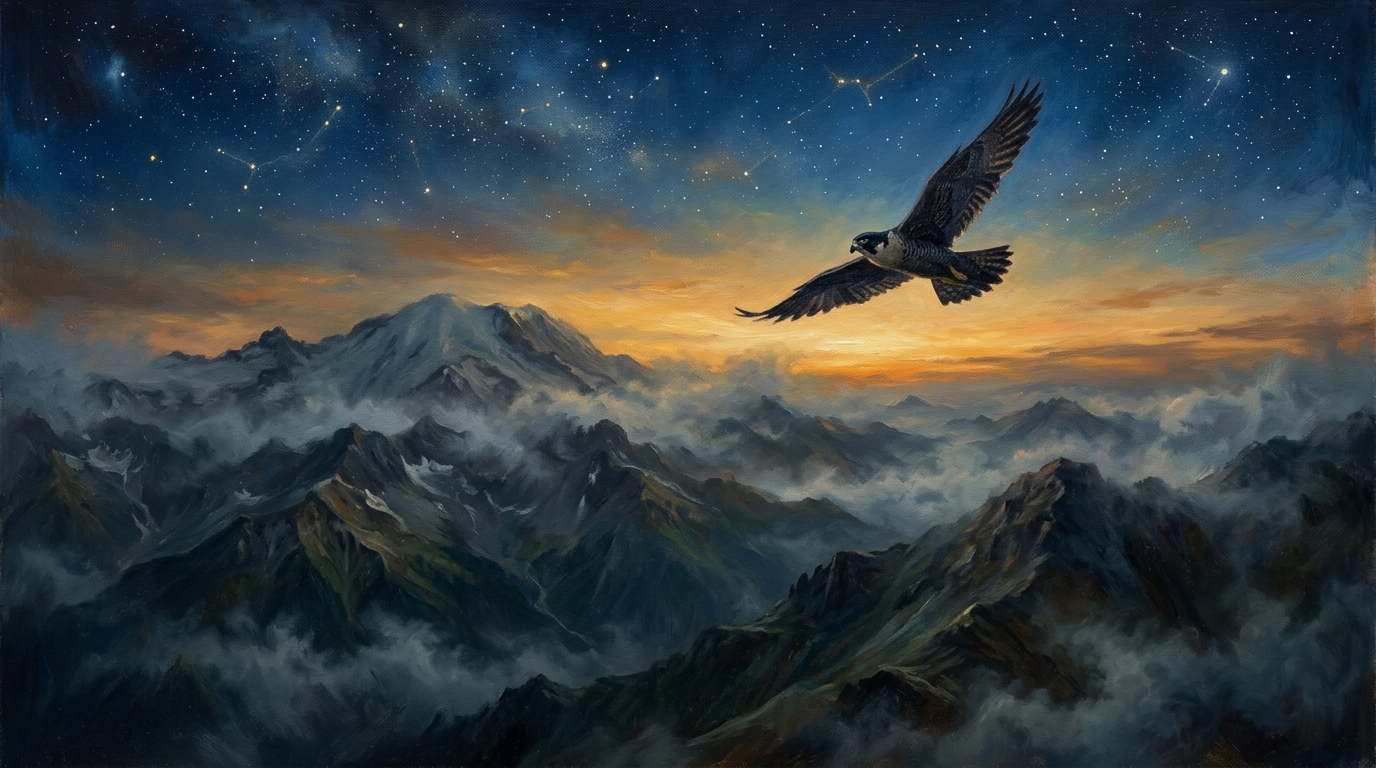
There is a peculiar sorrow that arrives right after a hard-won victory. You climb the hill, reach the ridge you stared at for months, and suddenly discover that standing still feels like fading away. The horizon did not close; it merely widened. We are creatures built for movement, yet we constantly try to build permanent homes out of temporary resting spots.
When Allama Iqbal wrote 'Sitaron se aage jahan aur bhi hain', he was speaking directly to that restlessness inside the human heart. It is not a poem of dissatisfaction, but a fierce spiritual manifesto against stagnation. Iqbal looks at the highest celestial landmarks we can imagine—the stars themselves—and tells us they are not the ceiling of our existence, but merely the first step on an infinite staircase.
The Architecture of Infinite Horizons
Written in the classical ghazal tradition and later included in Iqbal's seminal 1935 collection *Bal-e-Jibril* (Gabriel's Wing), this poem carries the pulse of an awakening. Though structured in traditional couplets, its temperament is forward-looking, urgent, and expansive.
In classical Urdu and Persian poetry, a ghazal is built from independent two-line poems called shers, each unified by a rigid musical architecture. The opening couplet (matla) establishes both the rhyme (qafia) and the refrain (radif). Here, the refrain is the phrase *aur bhi hain* ('there are more still'), a repeating hammer-strike reminding the listener that nothing has ended. The rhyming words preceding it—*jahan* (worlds), *imtihan* (trials), *karwan* (caravans), *aasman* (skies)—create a continuous rhythm of vastness. Every sher stands as a sovereign world, yet together they chart a single trajectory: the soul's refusal to settle.
Couplet by Couplet: Unfolding the Journey
To read this ghazal is to be stripped of complacency. Iqbal moves from the cosmos down to the individual spirit, demanding that we rethink our place in the universe.
The Threshold of Perpetual Longing
ستاروں سے آگے جہاں اور بھی ہیں
ابھی عشق کے امتحاں اور بھی ہیں
सितारों से आगे जहाँ और भी हैं
अभी इश्क़ के इम्तिहाँ और भी हैं
Sitaaron se aage jahan aur bhi hain,
Abhi ishq ke imtihaan aur bhi hain
Beyond the stars, there are other worlds still; There are yet more trials awaiting love.
The opening couplet sets a cosmic scale. In everyday thought, the stars represent the absolute boundary of achievement. To 'reach for the stars' is our metaphor for the ultimate summit. Iqbal shatters that ceiling in his very first breath. If you have crossed the stellar sphere, do not assume you have arrived. New realms are waiting.
The second line pivots with the word *ishq* (passionate love or spiritual longing). In Iqbal's lexicon, *ishq* is not a romantic indulgence; it is the burning creative energy that drives all life forward. A trial (*imtihan*) is usually feared as an ordeal, but here it is a gift. To face new trials means you are still alive, still evolving, and still capable of transformation.
The Living Cosmos
تہی زندگی سے نہیں یہ فضائیں
یہاں سیکڑوں کارواں اور بھی ہیں
तही ज़िंदगी से नहीं ये फ़ज़ाएँ
यहाँ सैकड़ों कारवाँ और भी हैं
Tahi zindagi se nahin ye fazaaen
Yahaan saikadon karwaan aur bhi hain
These open spaces are not void of life; Here, hundreds of other caravans journey on.
When we look into deep space, we often feel dwarfed by a cold, lifeless void. Iqbal rejects that cosmic loneliness. The vast expanses (*fazaayein*) are teeming with purpose and motion.
By invoking *karwan* (caravans), the poet draws on the ancient desert imagery of travelers moving together toward a common destination. You are not a solitary accident stranded in an uncaring universe. You are part of an immense, continuous procession of conscious striving.
The Danger of Settling
قناعت نہ کر عالم رنگ و بو پر
چمن اور بھی آشیاں اور بھی ہیں
क़नाअत न कर आलम-ए-रंग-ओ-बू पर
चमन और भी आशियाँ और भी हैं
Qanaa'at na kar aalam-e-rang-o-boo par
Chaman aur bhi aashiyane aur bhi hain
Do not settle for this world of color and scent; There are other gardens, other nests to build.
Here Iqbal takes direct aim at *qana'at* (contentment). While traditional mysticism often praises contentment as an antidote to worldly greed, Iqbal warns that spiritual contentment can easily curdle into laziness and resignation.
The phrase *aalam-e-rang-o-bu* refers to the physical, sensory world—a realm of surface beauty and momentary delight. Iqbal does not ask us to despise this garden, but urges us never to mistake the courtyard for the entire kingdom. If you build your nest only here, you trap your spirit in a cage of comfort.
Grief as a Foothold for Growth
اگر کھو گیا اک نشیمن تو کیا غم
مقامات آہ و فغاں اور بھی ہیں
अगर खो गया इक नशेमन तो क्या ग़म
मक़ामात-ए-आह-ओ-फ़ुग़ाँ और भी हैं
Agar kho gaya ik nasheman to kya gham / Maqamaat-e-aah-o-fughaan aur bhi hain
If one nest has been lost, what cause is there for grief? There are other stations for cries and passionate yearning.
Loss is inevitable whenever an individual dares to take flight. Iqbal addresses the sorrow of ruin: what happens when your nest (*nasheman*), your carefully constructed sanctuary, is shattered by storms?
The answer is startlingly stoic. Do not waste your life mourning a fallen shelter. The phrase *aah-o-fughan* (lamentation and cries) carries a double edge. On the surface, it acknowledges grief. But in mystical poetry, the cry of longing is the very spark that propels the seeker into higher realms. A lost home is merely an invitation to seek a higher vantage point.
The Falcon's Calling
تو شاہیں ہے پرواز ہے کام تیرا
ترے سامنے آسماں اور بھی ہیں
तू शाहीं है परवाज़ है काम तेरा
तिरे सामने आसमाँ और भी हैं
Tu shaahi hai parwaaz hai kaam tera, tire saamne aasmaan aur bhi hain
You are a falcon; flight alone is your true vocation; Look ahead, there are yet other skies before you.
This is the beating heart of the ghazal and the defining metaphor of Iqbal’s entire poetic corpus. The *shaheen* (royal falcon) is chosen not for cruelty, but for its austere majesty. Unlike the vulture, the falcon does not feed on carrion; unlike the sparrow, it does not build permanent, fragile nests in low bushes. It lives on high mountain peaks, braves the tempest, and finds joy solely in the act of flight (*parwaaz*).
The sher operates as a direct command to the reader's self-concept. You have forgotten what you are. You were not born to peck at seeds on the forest floor; your nature demands the open sky. And no matter how high you fly, the sky does not run out.
Breaking the Clock
اسی روز و شب میں الجھ کر نہ رہ جا
کہ تیرے زمان و مکاں اور بھی ہیں
इसी रोज़ ओ शब में उलझ कर न रह जा
कि तेरे ज़मान ओ मकाँ और भी हैं
Isī roz o shab mein ulajh kar na reh jā
Ki tere zamān o makān aur bhi hain
Do not remain tangled in this routine of day and night; For you possess other dimensions of time and space.
Routine is the quiet assassin of the soul. The cycle of dawn and dusk (*roz-o-shab*) represents ordinary, mechanical time—the daily grind of survival that eats away at human potential.
Iqbal insists that human consciousness is not bound by linear time (*zaman*) or physical geography (*makan*). When the mind awakens to its deeper power, it steps out of mere survival and enters creative eternity. You are far larger than your calendar.
The Awakening of Companions
گئے دن کہ تنہا تھا میں انجمن میں
یہاں اب مرے رازداں اور بھی ہیں
गए दिन कि तन्हा था मैं अंजुमन में
यहाँ अब मिरे राज़-दाँ और भी हैं
Gae din ki tanha tha main anjuman mein / Yahaan ab mire raaz-daan aur bhi hain
Gone are the days when I stood alone in the assembly; Here now, I have other keepers of my secret.
The concluding couplet reflects on the solitary burden of the visionary. In his earlier years, Iqbal often lamented that his contemporaries could not grasp his call for self-realization; he felt like a lone voice singing in an empty courtyard.
Here, the tone changes to quiet triumph. The ideas have taken root. A new generation of seekers—*raaz-dan*, those who understand the secret of inner strength—has begun to rise. The solitary wanderer looks around and discovers he has founded a movement.
Words to Know
तही (tahi)
empty or void; devoid of substance
फ़ज़ाएँ (fazaayein)
atmospheres, expanses, or open realms of space
क़नाअत (qana'at)
contentment; in Iqbal's usage, passive resignation or settling for mediocrity
आलम-ए-रंग-ओ-बू (aalam-e-rang-o-bu)
the world of color and scent; the material, sensory world
नशेमन (nasheman)
nest or dwelling; a symbol of fragile security
आह-ओ-फ़ुग़ाँ (aah-o-fughan)
sighs and lamentations; also the vocal passion of spiritual longing
शाहीन (shaheen)
the royal falcon; Iqbal’s quintessential symbol of daring, independence, and relentless aspiration
परवाज़ (parwaaz)
flight, soaring, the act of transcending limitations
राज़-दाँ (raaz-dan)
a confidant; one who understands the hidden truth or secret purpose
The Life Behind the Lines
Allama Muhammad Iqbal (1877–1938) wrote during a period of profound political subjugation and cultural exhaustion across the East. Colonial rule had left entire generations feeling helpless, resigned, and intellectually defeated. Many retreated into fatalism, believing their best days lay irreversibly in the past.
Iqbal used poetry as an instrument of psychological resurrection. At the core of his thought was the philosophy of *Khudi*—the cultivation of an active, self-reliant, and spiritually grounded selfhood. Rather than preaching world-denial or passive mysticism, Iqbal argued that the human ego must be forged through friction, challenge, and continuous action. When he wrote these verses for *Bal-e-Jibril*, he was attempting to shake his readers awake, demanding that they trade the safety of the gilded cage for the perilous majesty of the open sky.
Echoes Across Time
Iqbal’s vision of dynamic self-overcoming finds a striking parallel in the poetry of Rainer Maria Rilke. In his *Duino Elegies*, Rilke similarly insists that beauty and greatness are born only when human beings push against their boundaries, writing that winning does not matter: 'To withstand is all.'
A similar fire burns in Alfred Lord Tennyson's 'Ulysses', where the aging king refuses to rest by his hearth, declaring that 'all experience is an arch wherethrough / gleams that untravelled world.' Like Iqbal's falcon, Tennyson’s Ulysses views every achieved goal not as a finish line, but as an open doorway to another horizon.
Why It Still Matters
We live in an age obsessed with comfortable destinations: the secure job, the early retirement, the predictable routine. Yet we often find that achieving comfort brings only a quiet numbness. Iqbal reminds us that human fulfillment is found in the exertion of our wings, not in the softness of our perch.
When your plans collapse, or when you feel you have reached the end of what your current life can offer, this poem demands that you look up. What would you dare to attempt today if you stopped treating your current ceiling as the edge of the universe?
You were made for soaring; never let a broken nest convince you that the sky is finished.
Explore in Sukhan AI
This article is linked to poems, poets, and couplets from the Sukhan AI archive.
What is the central meaning of 'Sitaron se aage jahan aur bhi hain'?
The phrase means 'beyond the stars lie yet more worlds.' It encapsulates Iqbal's philosophy of limitless human potential, urging us never to settle for past achievements or current circumstances, but to pursue continuous growth, striving, and self-discovery.
What does the Shaheen (falcon) symbolize in Iqbal's poetry?
The Shaheen represents spiritual self-reliance, fearlessness, high ambition, and noble independence. Iqbal uses the falcon because it does not build permanent nests, avoids scavenging, and thrives in high altitudes and turbulent winds through relentless flight.
Which book does this ghazal belong to?
This ghazal is from Allama Iqbal's celebrated Urdu poetry collection *Bal-e-Jibril* (Gabriel's Wing), first published in 1935, which contains some of his most mature philosophical and spiritual verses.