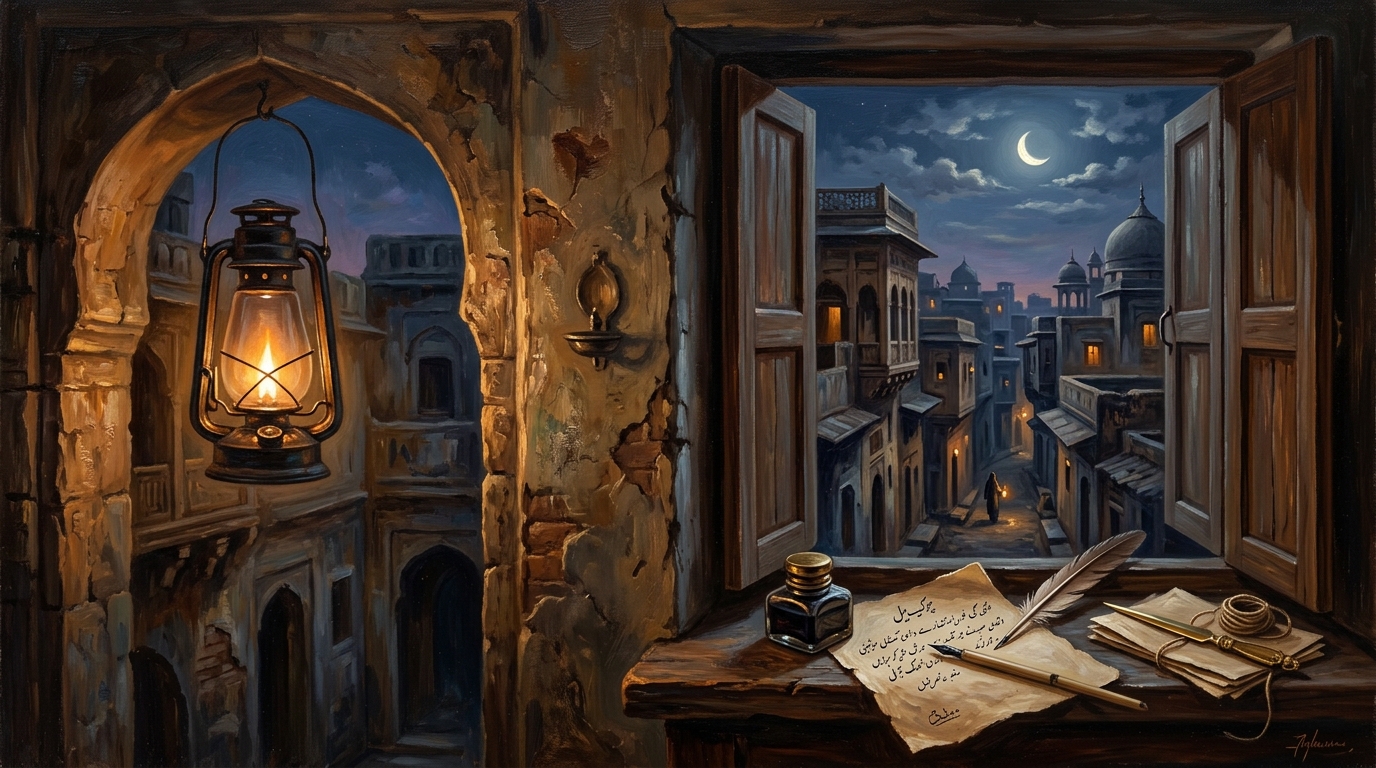
You have likely felt the strange ache that arrives five minutes after getting what you spent months praying for. The promotion comes through, the lover writes back, the longed-for apartment keys sit heavy in your hand—and yet, behind the brief surge of joy, a quiet void opens. We imagine satisfaction as a destination where we finally set our bags down and rest. Instead, every fulfilled hope simply clears ground for ten newer, sharper hungers.
No poet caught this restless human habit quite like Mirza Asadullah Khan Ghalib. In *Hazaron Khwahishen Aisi*, he does not moralize against desire or preach detachment. He steps directly into its crosshairs, smiling with bruised amusement. He knows desire is not a flaw in our nature. It is the very engine of living, one that burns our lives away while giving them their only heat.
Anatomy of an Unquiet Heart: The Ghazal at a Glance
Written during the fading twilight of Mughal Delhi in the nineteenth century, this ghazal captures Ghalib at his most sardonic and luminous. It is composed in a leisurely, contemplative meter that allows each thought breathing room before the hammer falls.
To hear its music, you have to watch its architecture. In a ghazal, every couplet—or *sher*—is an autonomous universe. The poet can move from existential grief to razor-sharp social satire without needing a bridge. What knots them together is form. Here, the *radif* (the repeating refrain) is 'dum nikle' (दम निकले / دم نکلے), a phrase loaded with double meaning that signals the breath leaving the body or an intense longing reaching its boiling point. Just before it sits the *qafia* (the rhyming sound): 'kam', 'dum-ba-dum', 'hum', 'kham', and 'jam'.
From its famous opening couplet (the *matla*) to its cheeky signature verse (the *maqta*), Ghalib turns a traditional romantic lyric into an inquiry on mortality, pretense, and the tragicomic theater of being human.
Couplet by Couplet: Unraveling the Lines
Let us walk through each sher slowly. Notice how Ghalib avoids simple sorrow, preferring the tension between wry laughter and deep ache.
The Endless Ledger of Want
ہزاروں خواہشیں ایسی کہ ہر خواہش پہ دم نکلے
بہت نکلے مرے ارمان لیکن پھر بھی کم نکلے
हज़ारों ख़्वाहिशें ऐसी कि हर ख़्वाहिश पे दम निकले
बहुत निकले मिरे अरमान लेकिन फिर भी कम निकले
Hazaron khwahishen aisi ki har khwahish pe dam nikle
Bahut nikle mere armaan lekin phir bhi kam nikle
Thousands of desires, such that on each desire breath would leave; many of my yearnings were fulfilled, yet they turned out to be few.
The ghazal opens with one of the most quoted lines in Urdu literature. Ghalib plays on the phrase *dum nikalna*, which means to die or give up the ghost, but also suggests fainting from sheer intensity of longing. Each desire is weighty enough to demand an entire lifetime of dying.
Then comes the sting in the second line. 'Bahut nikle' balances against 'phir bhi kam nikle'. He does not claim that he was deprived. In fact, a great many of his wishes came true. Yet, stacked against the vast, terrifying capacity of human longing, even a multitude of fulfilled dreams feels petty, an insultingly small down payment. The tragedy is not that we get nothing; it is that getting plenty never cures the hunger.
A Murder Without a Weapon
ڈرے کیوں میرا قاتل کیا رہے گا اس کی گردن پر
وہ خوں جو چشم تر سے عمر بھر یوں دم بدم نکلے
डरे क्यूँ मेरा क़ातिल क्या रहेगा उस की गर्दन पर
वो ख़ूँ जो चश्म-ए-तर से उम्र भर यूँ दम-ब-दम निकले
Dare kyūñ merā qātil, kyā rahegā us kī gardan par Vo ḳhūñ jo chashm-e-tar se umr bhar yūñ dam-ba-dam nikle
Why should my killer be afraid? What will remain on their neck of that blood which continuously flowed from weeping eyes throughout life?
Ghalib invokes the classic trope of the beloved as the executioner (*qaatil*). In Islamic jurisprudence, a killer carries the blood debt (*khoon-baha*) upon their neck. But Ghalib asks why his beloved should worry about divine reckoning.
The twist lies in the slow, unseen crime. If a heart bleeds away drop by drop through tears over decades, where is the sudden wound? Where is the bloody blade? By weeping his life out through grief, the lover has destroyed all forensic evidence. His slow emotional ruin exonerates the one who broke him.
The Eviction from Eden
نکلنا خلد سے آدم کا سنتے آئے ہیں لیکن
بہت بے آبرو ہو کر ترے کوچے سے ہم نکلے
निकलना ख़ुल्द से आदम का सुनते आए हैं लेकिन
बहुत बे-आबरू हो कर तिरे कूचे से हम निकले
nikalna khuld se aadam ka sunte aaye hain lekin bahut be-aabroo ho kar tire kooche se hum nikle
We have long heard about Adam being cast out of paradise; but with far greater dishonor did we leave your lane.
Here Ghalib matches the theological story of original sin against personal humiliation. Adam was cast out of paradise (*khuld*) for disobedience, a cosmic event accompanied by angelic sorrow and majestic myth.
Ghalib turns to his beloved's street (*koocha*)—the lover's private paradise—and scoffs. Adam's expulsion was dignified compared to his own. The poet was kicked into the gutter, disgraced, exposed to the whispers of neighbors. It is classic Ghalib: shrinking cosmic history into the gritty, embarrassing reality of a street quarrel.
The Illusion of Stature
بھرم کھل جائے ظالم تیرے قامت کی درازی کا
اگر اس طرۂ پر پیچ و خم کا پیچ و خم نکلے
भरम खुल जाए ज़ालिम तेरे क़ामत की दराज़ी का
अगर इस तुर्रा-ए-पुर-पेच-ओ-ख़म का पेच-ओ-ख़म निकले
bharam khul jaae zaalim tere qaamat ki daraazi kaagar is turra-e-pur-pech-o-kham ka pech-o-kham nikle
The illusion of your tall stature would be shattered, cruel one, if the curls of that tangled topknot were straightened out.
On the surface, this sher flatters the beloved's striking height and dark, intricate hair. But look closely at the word *bharom*, which means both prestige and an inflated illusion.
Ghalib warns the proud beloved that their towering grace depends entirely on how their hair is styled. If those coiled locks fell loose and their hidden length were measured, the lover's posture might not seem so imposing after all. It is a subtle puncture of vanity: pride often rests on what we coil and conceal.
The Town's Scribe of Grief
مگر لکھوائے کوئی اس کو خط تو ہم سے لکھوائے
ہوئی صبح اور گھر سے کان پر رکھ کر قلم نکلے
मगर लिखवाए कोई उस को ख़त तो हम से लिखवाए
हुई सुब्ह और घर से कान पर रख कर क़लम निकले
Magar likhwaae koi us ko khat to hum se likhwaae
Hui subh aur ghar se kaan par rakh kar qalam nikle
If anyone wishes to have a letter written to her, let them ask me; morning arrived, and I left home with a pen tucked behind my ear.
In nineteenth-century Delhi, professional letter-writers (*kaatib*) sat in bazaars, writing petitions and messages for illiterate citizens. Ghalib imagines himself waking up, tucking a reed pen behind his ear, and heading out to offer his services.
The genius is the unspoken motive. Why is he so eager to write everyone else's love letters to the beloved? Because it is the only way he can address her without being chased away. He becomes a conduit for other men's passions just to hear her name spoken and write the words he longs to say himself.
The Wine and the King's Mirror
ہوئی اس دور میں منسوب مجھ سے بادہ آشامی
پھر آیا وہ زمانہ جو جہاں میں جام جم نکلے
हुई इस दौर में मंसूब मुझ से बादा-आशामी
फिर आया वो ज़माना जो जहाँ में जाम-ए-जम निकले
hui is daur mein mansub mujh se baada-aashaami phir aaya vo zamaana jo jahaan mein jaam-e-jam nikle
In this era, wine-drinking came to be associated with me; once again that age returned when the cup of Jamshed appeared in the world.
Jamshid was a legendary Persian king who possessed the *Jaam-e Jam*, a magical chalice that reflected the entire universe. Ghalib had a well-known, unapologetic fondness for alcohol, often causing scandal among orthodox circles.
He elevates his private habit into an epic myth. Delhi gossips might sneer at his drinking, but Ghalib claims his cup is no ordinary indulgence. It is the ancient chalice of wisdom, reflecting life's joys and horrors. To censure his drinking is to misunderstand a man peering into the universe's soul.
The Solidarity of the Broken
ہوئی جن سے توقع خستگی کی داد پانے کی
وہ ہم سے بھی زیادہ خستۂ تیغ ستم نکلے
हुई जिन से तवक़्क़ो' ख़स्तगी की दाद पाने की
वो हम से भी ज़ियादा ख़स्ता-ए-तेग़-ए-सितम निकले
hui jin se tawaqqo' khastagi ki daad paane ki vo hum se bhi ziyaada khasta-e-tegh-e-sitam nikle
Those from whom I expected appreciation for my weariness turned out to be even more wounded by the sword of oppression than I was.
Suffering often makes us believe we are uniquely wounded. We go looking for a comforter, someone wise and unscathed who can bandage our wounds and say the right words.
Ghalib describes arriving at the threshold of friends, seeking sympathy (*daad*), only to find them bleeding on the floor from the same blade. The sword of cruelty (*tegh-e sitam*) spares no one. The realization is sobering: there are no unharmed adults in this world. The people you lean on are often struggling to keep their own knees from folding.
The Faithful Infidel
محبت میں نہیں ہے فرق جینے اور مرنے کا
اسی کو دیکھ کر جیتے ہیں جس کافر پہ دم نکلے
मोहब्बत में नहीं है फ़र्क़ जीने और मरने का
उसी को देख कर जीते हैं जिस काफ़िर पे दम निकले
Mohabbat mein nahin hai farq jeene aur marne ka, Usi ko dekh kar jeete hain jis kaafir pe dam nikle.
In love there is no difference between living and dying; we live only by looking at that very infidel upon whom our life is surrendered.
Ghalib dissolves the sharp boundary separating breath from death. In traditional Urdu poetry, *kaafir* (infidel) is a term of affection for a beloved who is merciless, indifferent to sacred rules, and utterly captivating.
Here is the paradox: the lover's breath leaves his body (*dum nikle*) at the sight of the beloved, yet that same gaze is the sole reason his heart continues to beat. He is sustained by the exact force that destroys him. Pain and breath become indistinguishable.
Catching the Preacher in the Alley
کہاں مے خانہ کا دروازہ غالبؔ اور کہاں واعظ
پر اتنا جانتے ہیں کل وہ جاتا تھا کہ ہم نکلے
कहाँ मय-ख़ाने का दरवाज़ा 'ग़ालिब' और कहाँ वाइ'ज़
पर इतना जानते हैं कल वो जाता था कि हम निकले
kahaan mai-khaane ka darwaaza 'ghalib' aur kahaan waa'izpar itna jaante hain kal wo jaata tha ki hum nikle
Where is the doorway of the tavern, Ghalib, and where is the preacher? But this much I know: yesterday he was entering just as I walked out.
Ghalib saves his most delightful arrow for the final sher (*maqta*). The pious preacher (*waa'iz*) has spent decades berating drunks and sinners from the mosque pulpit, drawing a rigid line between the holy sanctuary and the degraded tavern.
Ghalib feigns total innocence. He claims it makes no sense for such a holy man to be near a tavern door. Yet, Ghalib adds with a dry wink, as I stumbled out yesterday, who should be slipping inside but our preacher? Hypocrisy is not unmasked through anger, but with an amused tip of the hat as two flawed men cross paths at the tavern door.
The Poet's Vocabulary
دامِ نکلے (dum nikle)
for breath or life to leave; also signifies a state of unbearable longing
چشمِ تر (chashm-e tar)
moist or weeping eyes; an eye continually overflowing with sorrow
خلد (khuld)
paradise, eternity; specifically the Garden of Eden from which Adam fell
کوچہ (koocha)
a narrow lane or alleyway, often the private dwelling street of the beloved
طُرّہ (turrah)
a decorative crest or curl of hair on the forehead; an ornamental lock
پیچ و خم (peech-o-kham)
twists, turns, and coils; also symbolic of complications and deceptions
بادہ آشامی (baada-aashaami)
the act of wine-drinking, often tied to spiritual nonconformity
جامِ جم (jaam-e jam)
the legendary chalice of King Jamshid, which revealed the entire cosmos
خستگی (khastagi)
weariness, deep exhaustion, or the quiet ache of inner wounding
تیغِ ستم (tegh-e sitam)
the sword of tyranny or cruelty, wielded by fate or the beloved
کافر (kaafir)
literally an unbeliever; playfully used for an enchanting, merciless beloved
واعظ (waa'iz)
the moralizing preacher, a frequent target of ridicule in ghazal poetry
Debt, Ink, and Crumbling Empires
Ghalib did not write about grief from an ivory tower. He lived in the crammed, noisy lanes of Gali Qasim Jan in Old Delhi, drowning under debts that dogged him until his final breath. He watched the Mughal court collapse, his pension stall in British bureaucracy, and all seven of his infant children die before him.
When the Revolt of 1857 shook Delhi, the city he loved was ravaged, its poets exiled, its intellectual spine broken. Yet, amidst poverty and grief, Ghalib refused to perform sorrow as a tragedy. He cracked jokes about having no money, wrote playful letters about eating mangoes, and sipped French wine on credit. That defiance shines through *Hazaron Khwahishen Aisi*. The poem was born out of an empire's decline, yet it wears its bruises like fine jewelry.
Echoes Across Distant Shores
Ghalib's insight into insatiable yearning finds an eerie twin across European philosophy. A few decades earlier, Arthur Schopenhauer observed that human desire is like the thirst of Tantalus: satisfying one wish only hands us the burden of boredom until another wish takes its place. Yet where Schopenhauer sees a dark reason to abandon desire, Ghalib shrugs, pours another drink, and dives back in.
His sharp wit against holy hypocrites in the final verse mirrors the French dramatist Molière in *Tartuffe*. Both men recognized that the loudest moralizers are usually looking for the same backdoor entrances as the rest of humanity. Ghalib needs no five-act play, however; he exposes religious pretense in just twenty words.
Living With the Wild Heart
We live in an age designed to turn Ghalib's diagnosis into an industry. Modern culture promises that the next purchase, the next relationship milestone, or the next job title will finally bring contentment. We keep believing that the problem is the quality of our fulfillment, not the nature of desire itself.
Ghalib cuts through that noise. He reminds us that wanting more is not a moral failing—it is simply how the heart is built. The goal is not to silence desire, but to develop the humor and dignity required to live alongside it without being fooled.
When was the last time you let yourself want something fiercely, while fully knowing it could never truly satisfy you?
Desire will kill us all in the end, but Ghalib proves there is immense grace in going down singing.
Explore in Sukhan AI
This article is linked to poems, poets, and couplets from the Sukhan AI archive.
What is the central meaning of Hazaron Khwahishen Aisi?
The ghazal explores the boundless nature of human desire. Ghalib points out that even if thousands of our deepest wishes are granted, human longing will always outstrip fulfillment, leaving us eternally restless yet passionately engaged with living.
Who wrote Hazaron Khwahishen Aisi?
It was composed by Mirza Asadullah Khan Ghalib, widely considered the preeminent poet of the Urdu language, who lived during the twilight of the Mughal Empire in nineteenth-century Delhi.
What does 'dum nikle' mean in the refrain of this ghazal?
In Urdu, 'dum nikle' literally translates to 'breath leaves' or 'to die'. Ghalib uses it with double meaning: describing desires so intense they take one's breath away, as well as the ultimate exhaustion of dying with unfulfilled longings.
Why does Ghalib mock the preacher (waa'iz) in the final sher?
In classical Urdu poetry, the preacher symbolizes dogmatic hypocrisy. By spotting the preacher slipping into the tavern as he exits, Ghalib humorously proves that beneath rigid moralizing, human vulnerability and worldly temptations are universal.