This Soft, Gentle Breeze: Firaq Gorakhpuri’s “यह नर्म नर्म हवा”
A soft breeze, the scent of memory, and the trembling of candle flames—Firaq Gorakhpuri’s poem stirs the heart with longing and the quiet power of love.
Sometimes, a breeze stirs a half-forgotten scent, and suddenly the past is alive again. We all know how a fragrance, a flicker of light, or a brush of air can bring longing and tenderness flooding in—a beloved’s smile, a room lit for prayer, the hush of night. In “यह नर्म नर्म हवा”, Firaq Gorakhpuri captures this elusive magic. His poem is not loud with heartbreak; it moves quietly, like candlelight trembling in a gentle wind, filling memory and mind with the soft power of love’s presence. This is a poem about what lingers, what glows, and what returns to us even when all seems still.
A Candlelit Vision: Form and Mood of Firaq’s Poem
Firaq Gorakhpuri, one of Urdu’s most beloved poets, wrote “यह नर्म नर्म हवा” in the form of a ghazal—a sequence of couplets where each sher stands alone, yet together they create a mood of longing and intimacy. The poem’s refrain is 'चिराग़', the candle or lamp, evoking both spiritual and romantic light. The rhyme before it (qafia) changes in each couplet, but the anchoring end-word returns like a motif. The opening couplet (matla) sets the mood, and the final couplet (maqta) carries Firaq’s pen-name, drawing poet and poem together. This ghazal is suffused with the warmth of love remembered—neither fully present nor lost, but flickering in the mind, the air, and the secret corners of the heart.
Candles, Breezes, and the Memory of Love: The Verses Unfolded
Firaq’s poem moves through scent, light, and memory, each couplet a different window into longing. Let’s enter two of its most luminous moments.
A Breeze, a Scent, a Mind Filled with Light
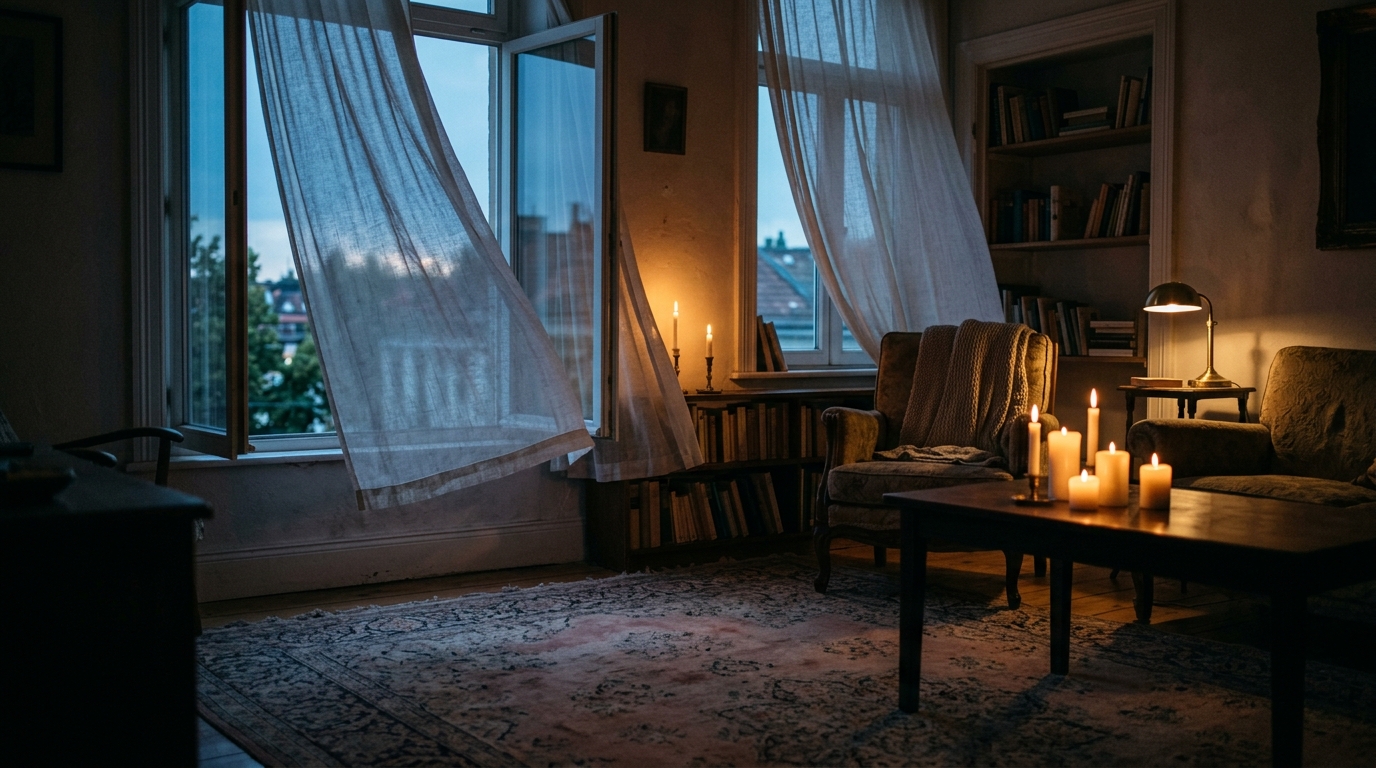
यह नर्म नर्म हवा झिलमिला रहे हैं चिराग़
तेरे ख़्याल की खुश्बू से बस रहे हैं दिमाग़
Yah narm narm hawa, jhilmila rahe hain chiragh,
Tere khayal ki khushbu se bas rahe hain dimaagh
The soft breeze is trembling the candles; my mind is filled with the fragrance of your memory.
On the surface, a gentle wind makes candle flames flicker, and the beloved’s memory fills the poet’s mind with fragrance. The moment is intimate: not the blaze of passion, but its afterglow. Emotionally, this is about how love persists in the everyday—the way a thought or a scent can inhabit us, quietly transforming our inner world. The turn lies in the interplay of physical and emotional: the external trembling of candles mirrors the inner quivering of memory. The breeze is not just a natural event; it is the touch of longing itself.
A Smile Remembered, a Temple Illuminated
दिलों को तेरे तबस्सुम की याद यूं आई
कि जगमगा उठें जिस तरह मंदिरों में चिराग
Dilon ko tere tabassum ki yaad yun aayi,
Ki jagmagaa uthein jis tarah mandiron mein chiraag
Remembering your smile lit up my heart, just as lamps light up temples.
Here, the memory of a smile becomes a sudden radiance, like the ceremonial lighting of lamps in a temple. The literal and the symbolic blend: the beloved’s smile is sacred, love itself an act of devotion. The deeper truth is that remembrance can be as transformative as presence—what is absent can still illuminate us. The turn: a simple memory becomes a spiritual event, and longing becomes a kind of prayer.
From Chiraag to Bahaar: Words That Carry Worlds
चिराग़
lamp or candle; symbol of hope, love, or spiritual illumination
ख़्याल
thought, memory, imagination
तबस्सुम
smile
शोला-ए-गुल
flame of a flower; metaphor for passionate or delicate beauty
मौज-ए-बहार
wave of spring; surge of new life or hope
ता-हद-ए-निगाह-ए-शौक़
as far as the eye of longing can see
बाग़
garden; symbol of paradise or the heart
फ़राग
leisure, freedom; sometimes rest from longing
दाग़-ए-मोहब्बत
wound or scar of love; trace of longing
बज़्म-ए-चिरागां
gathering of lamps; assembly of illuminated hearts
महफ़िल-ए-रिन्दां
gathering of drinkers; often spiritual seekers or lovers
अयाग़
cup, goblet; vessel for wine or for spiritual ecstasy
Firaq’s World: Between Memory and Modernity
Firaq Gorakhpuri (real name: Raghupati Sahay) was born in 1896 and lived through the tumult of colonial India and the dawn of independence. His poetry bridges classical Persian forms and modern sensibility. In “यह नर्म नर्म हवा”, the nostalgia is not just for a person, but for a world in transition. Firaq’s own life was marked by longing—his longing for a lost love, for cultural synthesis, for a place in changing times. The gentle melancholy of this poem mirrors his experience: rooted in tradition, but always seeking something new, something just out of reach, like a candle’s glow in a restless wind.
Echoes and Refractions: Other Lamps, Other Breezes
The image of a trembling lamp and the memory of love appear in many traditions. Rumi wrote of the heart as a lamp lit by the presence of the Beloved, flickering but never extinguished. Kabir, too, spoke of the inner lamp burning in the temple of the heart, connecting the earthly and the divine. In Shakespeare’s Sonnets, memory is a force that revives lost love, much as Firaq’s breeze animates the mind. Each tradition returns to the idea that longing is not emptiness, but a kind of illumination—what we miss most is also what makes us alive.
Love’s Gentle Persistence: Why “यह नर्म नर्म हवा” Still Speaks
In an age of noise and urgency, Firaq’s poem is a reminder of the power of gentleness. It tells us that longing is not always pain; sometimes, it is a lamp quietly burning in the mind, a breeze that refreshes rather than destroys. Even now, who hasn’t been carried away by a memory, a scent, or a smile? What soft breeze moves through your life, lighting forgotten corners? In the stillness, the poem whispers: love returns in the quietest ways.
Explore in Sukhan AI
This article is linked to poems, poets, and couplets from the Sukhan AI archive.
It means 'this soft, gentle breeze.' In the poem, it’s both a literal breeze and a symbol for the subtle presence of memory and longing that stirs the mind and heart.
Who wrote 'यह नर्म नर्म हवा'?
This poem was written by Firaq Gorakhpuri, the pen name of Raghupati Sahay—a celebrated Urdu poet known for his romantic and deeply personal ghazals.
What is the significance of 'चिराग़' in Urdu poetry?
'चिराग़' (chiraag) means lamp or candle. It often symbolizes hope, love, or spiritual illumination—the light that endures through darkness or longing.
Is 'यह नर्म नर्म हवा' a ghazal?
Yes, it is written in the ghazal form. Each couplet (sher) is self-contained, but together they evoke a single emotional world, with the word 'चिराग़' uniting them.