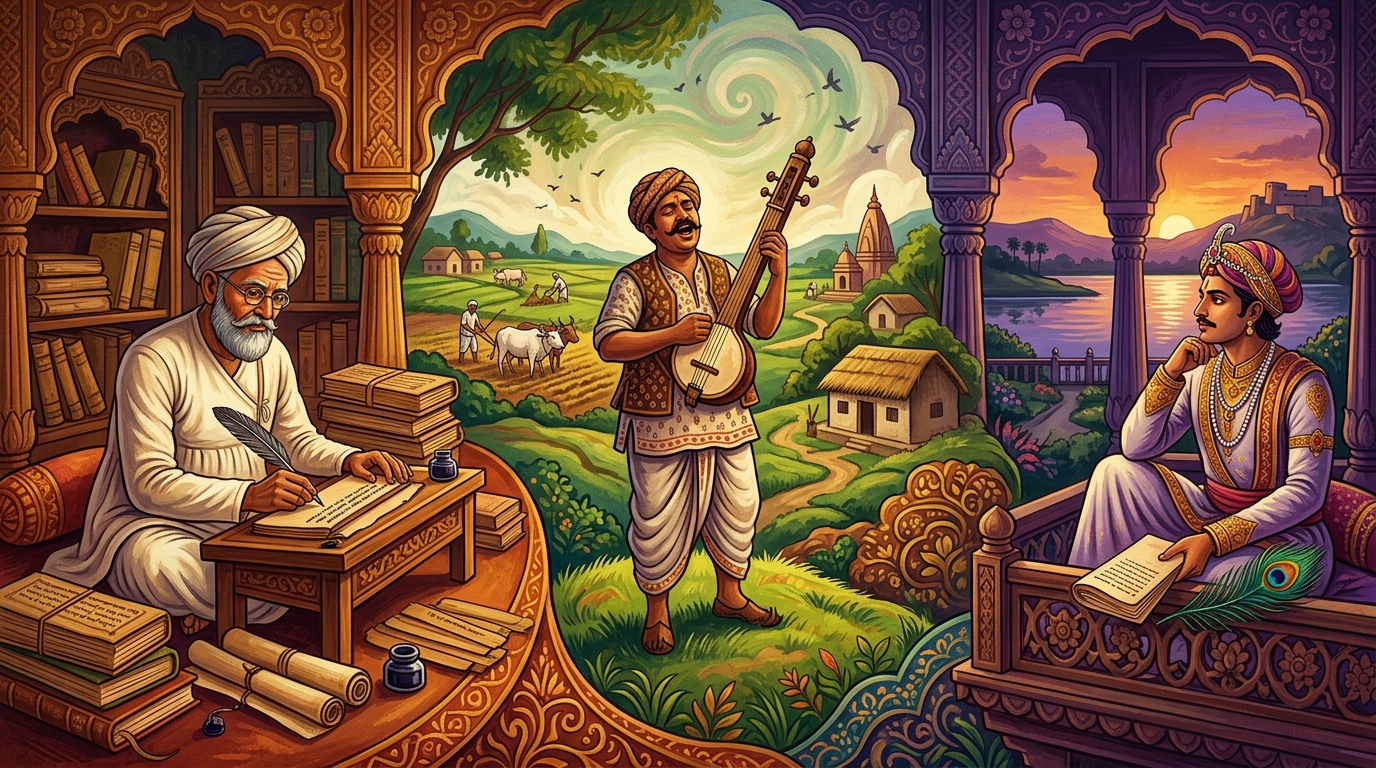
An Invitation to the Soulful World of Gujarati Poetry
Indian poetry is a tapestry woven with threads of countless languages and traditions, each contributing unique hues and patterns. Among these, Gujarati poetry shines with a distinct brilliance, offering profound insights into life, love, patriotism, and social reform. For any true lover of verse, exploring the rich legacy of Gujarati poets is not just an academic pursuit but a journey into the heart of India's cultural ethos. This article introduces you to some of the most influential voices that have shaped Gujarati literature, whose works continue to inspire and resonate deeply.
Why Gujarati Poetry Matters to Every Indian Heart
The verses penned by Gujarati poets transcend regional boundaries, speaking to universal human experiences while remaining deeply rooted in the soil of Gujarat. From lyrical expressions of nature's beauty to rousing calls for social awakening and national unity, these poets have captured the essence of their times and articulated aspirations that remain relevant today. Their work offers a window into the historical, social, and spiritual landscape of India, making them indispensable for anyone seeking a comprehensive understanding of Indian literary heritage. Their emotional depth, philosophical insights, and artistic craftsmanship make them truly timeless.
Narmad: The Pioneer of Modern Gujarati Literature
Considered the 'Father of Modern Gujarati Literature', Narmadashankar Dave, simply known as Narmad, spearheaded a new era of literary expression. He was a revolutionary, a social reformer, and a prolific writer who challenged orthodox traditions and advocated for progress. His bold and clear voice laid the foundation for future generations of poets and writers. His reflections often mingled with observations of the natural world, as seen in his poem 'Vanvarnan' (Description of the Forest). For instance, he muses:
A Glimpse into Narmad's Wisdom
Narmad's profound connection to nature and his philosophical outlook are beautifully encapsulated in his poetry. He found wisdom and peace in observing the world around him. A notable couplet from 'વનવર્ણન' (Vanvarnan) illustrates this perfectly:
"આહા જોતાં બહુ નવનવા રંગના જીવજંતો,
થાયે ડાહ્યો સમજણથકી જીવ મારો નચંતો."
This Gujarati couplet (id: narmad-wanwarnan-narmad-metrical-poem-couplet-38) translates to: "Ah, beholding creatures, new in every hue, My soul grows wise through understanding, and finds its peace anew." This sentiment reflects his journey of self-discovery through observation and understanding, encouraging readers to find deeper meaning in the mundane.
Jhaverchand Meghani: The Bard of Saurashtra
Jhaverchand Meghani is a name synonymous with folk literature, patriotism, and the spirit of Saurashtra. Known as 'Rashtriya Shayar' (National Poet) by Mahatma Gandhi, Meghani's poetry captured the soul of Gujarat's rural life, its legends, and its struggles for freedom. His powerful verses often served as a call to action, inspiring people to rise against injustice and embrace unity. His ability to weave traditional folk forms with contemporary themes made his work immensely popular and impactful.
Meghani's Call for Resilience and Unity
Meghani's 'Chhello Katoro' (The Last Cup) remains one of his most iconic and emotionally charged works, symbolizing resilience in the face of adversity. In a stirring address, he writes:
"દેખી અમારાં દુઃખ નવ અટકી જજો, બાપુ!
સહિયું ઘણું, સહીશું વધુ: નવ થડકજો, બાપુ!"
This Gujarati couplet (id: jhaverchand-meghani-chhello-katoro-jhaverchand-meghani-geet-couplet-9) means: "Seeing our sorrows, do not hesitate, O Father! Much have we borne, and more we shall bear: do not waver, O Father!" It is a testament to the enduring spirit of his people. Another powerful call for awakening and unity is found in his work, such as:
"સૂતાં લોક, જાગો!
જાગો રે, ભાઈ, જાગો!"
This Gujarati couplet (id: jhaverchand-meghani-dudhwalo-aawe-jhaverchand-meghani-geet-couplet-8) translates to: "Sleeping folk, wake up! Wake up, oh brother, wake up!" And addressing sectarian divides, he urged unity:
"કોમ પંથ શું તાળી લાગી, સકળ સ્વારથ તેના તનમાં રે. –હિન્દી જન.
સકળ દેશથી સૌ કોઈ આવો, દાસ થશું સહુ કો’ના રે!"
This Gujarati couplet (id: jhaverchand-meghani-hindijan-jhaverchand-meghani-geet-couplet-5) conveys: "Why are communities so absorbed, with all self-interest residing within themselves? From every land, let all come forth; we shall be servants to everyone!" These lines encapsulate Meghani's vision for a united, awakened India.
Kalapi: The Royal Poet of Love and Longing
Sursinhji Takhtsinhji Gohil, known by his pen name Kalapi, was a prince who became a poet of profound emotional depth. His ghazals and poems are steeped in themes of love, longing, sorrow, and the ephemeral nature of life. Kalapi's lyrical mastery and poignant expression earned him a special place in the hearts of Gujarati readers. His work, though often melancholic, possesses a timeless beauty that continues to captivate. While no specific couplets are provided in the current context, his overall contribution to the emotional landscape of Gujarati poetry is undeniable and highly celebrated.
Modern Interpretation and Lasting Legacy
The works of Narmad, Jhaverchand Meghani, and Kalapi are not merely historical artifacts; they are living testaments to the power of language and human emotion. Their themes of social justice, national identity, personal struggle, and the search for beauty continue to resonate with contemporary audiences. In an increasingly globalized world, their voices remind us of the rich diversity within India's cultural fabric and the universal truths that bind us all. Their poetry encourages reflection, inspires action, and offers solace, proving that true art knows no temporal or linguistic bounds.
Listening to the Voices: An Audio Suggestion
To truly appreciate the melody and rhythm of Gujarati poetry, listening to recitations is highly recommended. Many platforms offer audio renditions of Narmad's revolutionary verses, Meghani's stirring folk songs, and Kalapi's soulful ghazals. Hearing the original Gujarati will allow you to connect with the nuances of the language and the emotional depth intended by the poets, enriching your understanding and appreciation of their timeless contributions to Indian literature.