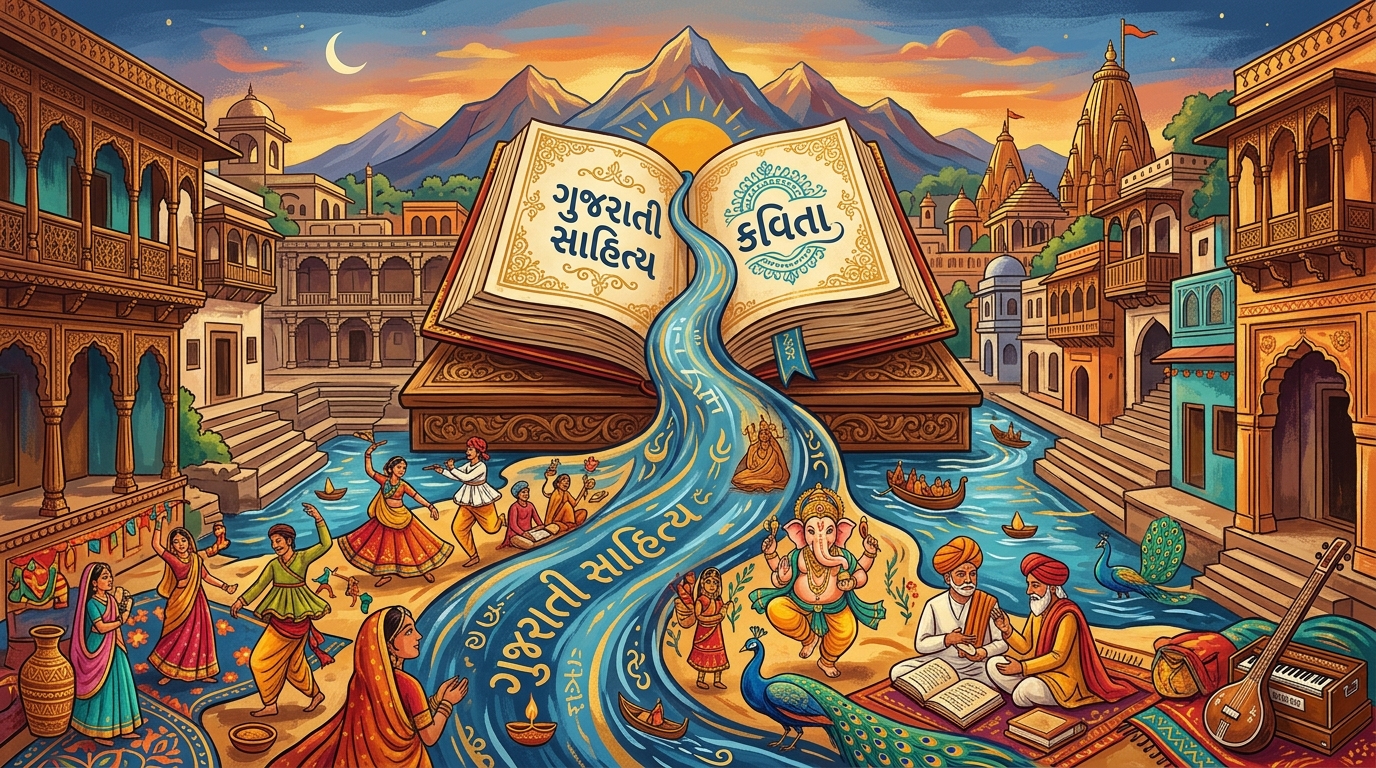
The Echoes of a Vibrant Land: Discovering Gujarati Poetry
India's poetic landscape is a mosaic of diverse languages and traditions, each with its unique flavor and profound depth. Among these, Gujarati poetry stands as a vibrant, soul-stirring tradition that often goes unsung outside its linguistic boundaries. It's a treasure trove of emotions, philosophies, and cultural narratives, waiting to be explored by every lover of Indian verse. From ancient devotional songs to modern free verse, Gujarati poetry has mirrored the aspirations, struggles, and joys of its people, offering a window into the heart of a resilient and culturally rich state.
Why Gujarati Poetry Matters: A Legacy of Lyrical Brilliance
The significance of Gujarati poetry transcends mere linguistic appreciation; it's a testament to the power of words to shape identity and inspire generations. These poems are not just literary works; they are cultural artifacts that preserve history, articulate social change, and celebrate the human spirit. For any Indian poetry enthusiast, understanding Gujarati poetry means connecting with a vital part of the nation's literary heritage, recognizing how regional voices contribute to the grand symphony of Indian literature. The works of poets like Narmad, Kalapi, and Jhaverchand Meghani are particularly foundational, offering insights into love, revolution, and the everyday experiences of life.
Pioneers of the Gujarati Poetic Renaissance
The journey through Gujarati poetry is incomplete without acknowledging its trailblazers. Kavi Narmad (Narmadashankar Lalshankar Dave), often hailed as the "Father of Modern Gujarati Literature," heralded a new era with his progressive thoughts and bold expressions. While no specific couplets from Narmad are provided in this context, his impact as a social reformer and a powerful voice advocating for social change, women's education, and national pride in the 19th century laid the groundwork for future generations. His pioneering spirit encouraged a shift from traditional forms to more contemporary themes, deeply influencing the trajectory of Gujarati letters.
Kalapi: The Princely Poet of Romance and Reflection
Kalapi (Sursinhji Takhtsinhji Gohil), a prince from Lathi, Gujarat, left an indelible mark with his intensely personal and deeply emotional ghazals. His poetry often explores themes of love, longing, introspection, and the transient nature of life, all imbued with a poignant melancholy that resonates deeply with readers. His ghazals are celebrated for their lyrical beauty and profound philosophical undertones, making him one of Gujarati literature's most beloved figures. Consider his poignant lines from "અમારી પિછાન" (Amari Pichhan), where he writes:
`ગમે તે બેહયાઈને દઈ માથું ધરી ખોળે,
અમે આરામમાં ક્યાંયે સુખેથી ઊંઘનારાઓ.`
This couplet from `kalapi-amari-pichhan-kalapi-ghazals-couplet-8`, means: "Whatever brazenness may come, we hold its head within our lap, We are not among those who ever sleep in comfort's peaceful trap." This speaks to a spirit that embraces challenges rather than seeking comfort. Another example of his profound introspection can be found in "અમારી મસ્ત ફકીરી" (Amari Mast Fakiri):
`ખુશી આફત મૂકી સાથે, ધખાવી હોળીઓ હાથે,
બીજાના દુઃખની માથે, ખુશીથી જ્યાં સજા લેવી. ૧૦`
This translates to: "Joy brought calamity in its train, igniting pyres with its own hand, Upon the grief of others, where punishment is gladly received," from `kalapi-amari-mast-phakiri-kalapi-ghazals-couplet-10`. These verses highlight Kalapi's unique perspective on joy, sorrow, and selflessness.
Jhaverchand Meghani: The National Bard and Voice of the People
Jhaverchand Meghani, affectionately known as "Rashtriya Shayar" (National Bard) by Mahatma Gandhi, was a towering figure in Gujarati literature, celebrated for his powerful ballads, folk songs, and patriotic verses. His work vividly captured the spirit of Saurashtra, its people, their struggles, and their inherent strength. Meghani's poetry often championed the cause of the common person and played a significant role in the Indian independence movement. He brought the rural landscape and its narratives to the forefront of Gujarati literature. Take, for instance, this evocative line from "કસુંબીનો રંગ" (Kasumbino Rang):
`ભક્તોના તંબૂરથી ટપકેલો મસ્તીભર
ચાખ્યો કસુંબીનો રંગ;`
This couplet, from `jhaverchand-meghani-kasumbino-rang-jhaverchand-meghani-geet-couplet-8`, means: "From devotees' tanpura, dripped with ecstasy, I tasted kasumbi's vibrant, intoxicating hue," and conveys a sense of spiritual intoxication and devotion. His empathy for the common person is evident in "કેદીનું કલ્પાંત" (Kedi nu Kalpant):
`(મારા) બરધિયાને કાંધ હવે કેમ છે?
રે’તા ભૂખ્યા કે રાતના ધરાય રે. -જેલનાં.`
This translates to: "How fare the shoulders of my bullocks now? Are they left hungry, or are they fed at night?", from `jhaverchand-meghani-kedinun-kalpant-jhaverchand-meghani-geet-couplet-23`. This couplet beautifully illustrates the prisoner's concern for his bullocks, a poignant reflection of rural life and its interconnectedness. Even simpler observations carry deep meaning, as in "વીરડો" (Virado):
`ચકી કરે આછાં
દેવ કરે આછાં.`
Meaning "The sparrow makes things light, God makes things light," from `jhaverchand-meghani-wirdo-jhaverchand-meghani-geet-couplet-9`, this couplet highlights the beauty and simplicity of nature and divine presence.
Emotional Resonance: Pride, Reflection, and Resilience
The poetry of Gujarat evokes a profound range of emotions. From Narmad's clarion call for social awakening to Kalapi's melancholic musings on love and existentialism, and Meghani's robust celebration of folk spirit and patriotism, these voices collectively inspire pride in cultural heritage and deep reflection on the human condition. Their works often speak to resilience, the enduring strength of the common people, and the eternal search for meaning. This emotional depth makes Gujarati poetry not just a linguistic exercise but a heartfelt journey for its readers.
Cultural and Historical Tapestry
These poets emerged during pivotal times in Indian history, their works reflecting the social, political, and cultural shifts of their eras. Narmad's period saw the dawn of modernism and a push for social reform. Kalapi's era was one of evolving sensibilities, where personal emotion found a powerful voice. Meghani's contributions were deeply intertwined with the freedom struggle, using traditional forms to galvanize national sentiment. Their poetry thus serves as a vibrant historical record, capturing the essence of Gujarat's transformation through colonial rule, independence movements, and the shaping of a distinct regional identity.
Modern Interpretations and Lasting Legacy
The relevance of Narmad, Kalapi, and Meghani's works persists powerfully today. Their themes of identity, social justice, love, and humanity remain timeless. Modern readers continue to find solace, inspiration, and a sense of connection in their verses, reinterpreting them through contemporary lenses. Their legacy is not just in the words they penned but in the literary tradition they forged, inspiring countless subsequent poets and ensuring that the soul of Gujarat continues to sing through its poetry. Sukhan AI aims to make these enduring voices accessible to a global audience, fostering a deeper appreciation for India's diverse linguistic heritage.